Source Laser Welding Tube Mill for Decoration Industry Medical
Compare 28 laser welding tube mill options from verified suppliers in China. These production lines support round, square, and oval shapes for industrial and medical applications with customizable specifications.
Key considerations
Products List


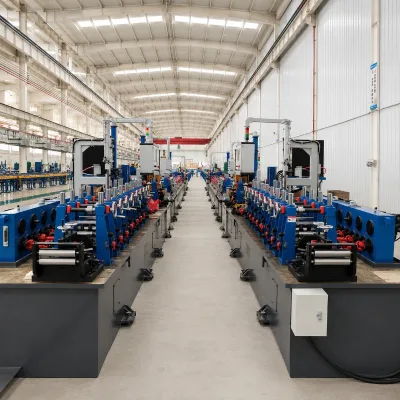
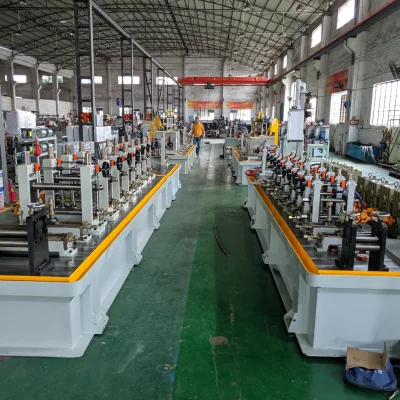
Tube Mill Machine High Frequency Welding Tube Mill
$60000.00 - $120000.00
Moq: 1
Botou Boheng Metallurgical Equipment Manufacturing Co., Ltd.


Comprehensive Sourcing Guide
Strategic Sourcing Guide for Laser Welding Tube Mills
The global industrial landscape increasingly relies on high-precision forming equipment to meet the demands of modern manufacturing. Among these, the laser welding tube mill stands out as a critical asset for producing seamless and welded tubes with superior dimensional accuracy and surface finish. For procurement professionals, navigating the market for this specialized machinery requires a disciplined approach that separates marketing assertions from verifiable technical facts. This guide synthesizes observed market data and technical parameters to provide a structured framework for evaluating laser welding tube mill suppliers, ensuring that procurement decisions are grounded in evidence rather than speculation.
Technical Specifications and Machine Configuration
Understanding the technical architecture of a laser welding tube mill is the first step in any sourcing strategy. The core functionality of these machines revolves around the welding method, material compatibility, and dimensional capabilities. Based on current market observations, the dominant welding technology for these lines is the Laser Welding System, which offers high energy density and minimal heat-affected zones compared to traditional TIG or plasma methods. The observed product attributes indicate that these machines are designed to handle a variety of input materials, including Stainless Steel, Carbon Steel, and Galvanized Steel. This versatility allows a single production line to serve multiple downstream applications, from general industry to specialized sectors.
The dimensional specifications of the output tube are critical constraints for procurement. The market data reveals a wide range of capabilities, with pipe diameters observed from 25.4 mm up to 76.2 mm in specific configurations, while other models support an outer diameter (O.D.) range of 6 mm to 325 mm. Thickness capabilities also vary significantly, with observed ranges spanning from 0.5 mm to 3.0 mm in some lines, and extending up to 10.0 mm in others. Buyers must verify the specific model's capacity against their production requirements, as a machine optimized for thin-walled sanitary tubes may not be suitable for heavy industrial piping. Furthermore, the shape of the final product is not limited to round profiles; the equipment is capable of producing Square, Rectangular, and Oval shapes, necessitating a review of the roller pass design.
| Parameter Category | Observed Range/Type | Verification Requirement |
|---|---|---|
| Welding Method | Laser Welding System | Confirm laser source brand and power rating |
| Input Material | Stainless, Carbon, Galvanized Steel | Verify roller material compatibility (e.g., 42CrMo/SKD11) |
| Pipe Diameter | 6 mm - 325 mm (varies by model) | Match specific model O.D. range to product needs |
| Wall Thickness | 0.38 mm - 10.0 mm | Confirm tolerance capabilities for specific thickness |
| Production Speed | 1 - 15 m/Min | Validate speed consistency under load |
| Control System | PLC | Ensure software version and interface compatibility |
Compliance, Certification, and Safety Standards
In the realm of industrial machinery, compliance is not merely a bureaucratic hurdle but a fundamental indicator of manufacturing quality and safety. Procurement teams must prioritize suppliers who can provide documented evidence of adherence to international standards. The market data explicitly references ISO9001 certification, which serves as a baseline for quality management systems. However, buyers should not assume that all listed products automatically satisfy this standard without requesting the specific certificate for the machine model in question.
Beyond general quality management, specific application sectors often demand higher regulatory compliance. For instance, the "Scope of Application" data points to Medical Tube and Sanitary Tube production lines. These applications typically require adherence to stricter hygiene and material traceability standards, such as ASME BPE or specific FDA regulations regarding surface finish and material purity. While the supplied facts mention "Bright Annealing" as a heat treatment process, which is crucial for maintaining the corrosion resistance of stainless steel, buyers must verify if the annealing furnace included in the line meets the specific atmosphere control requirements for sanitary applications. Additionally, electrical safety is paramount; observed voltage specifications range from 380V 50Hz to a broader range of 220V to 440V. It is essential to confirm that the machine's electrical design matches the local grid infrastructure and that it complies with regional safety standards like CE or UL, which are not explicitly listed in the general data but are industry norms.
Cost Drivers and Pricing Structure Analysis
The financial aspect of sourcing a laser welding tube mill is complex, driven by a combination of technical specifications, customization levels, and logistical factors. The observed price range in the market is substantial, spanning from approximately $14,800 to $30,000,000. This vast disparity indicates that the "base" price of a machine is heavily influenced by its capacity, automation level, and the inclusion of auxiliary systems like bright annealing furnaces or laser welding sources. A machine capable of producing 1 mm thick tubes at 15 meters per minute will naturally command a higher price than a smaller unit designed for 0.5 mm thickness at slower speeds.
Customization is a primary cost driver. The data confirms that customization is available and that dimensions, voltage, and even the production model (e.g., Kt-Gy50, SZG-30/40/50 series) can be tailored. Buyers should anticipate that a "Customized" order will incur higher costs and longer lead times compared to a standard model. The lead time data suggests a baseline of 30 to 60 days, with some configurations requiring up to 90 days. This variation often correlates with the complexity of the customization and the supplier's current production queue. Furthermore, the "Capacity" of the supplier, noted as 1-15m/Min, implies that high-volume lines may have different pricing structures due to the scale of components required. Buyers must also consider the total cost of ownership, including the cost of spare parts, the expected "Use Life" of critical components like rollers (observed as 20 years for specific high-grade materials), and energy consumption, which is tied to the power supply requirements (e.g., 415V/3pH).
Typical Applications and Industry Suitability
The versatility of laser welding tube mills makes them suitable for a diverse array of industries, but the specific configuration must align with the end-use requirements. The primary application categories identified in the market data are "Decoration" and "Industry." In the decorative sector, the focus is often on aesthetic finish, precise dimensions, and the ability to produce complex shapes like square or oval tubes. Here, the "Pipe Shape" capability and the surface quality resulting from the laser welding process are the deciding factors.
In the industrial sector, the applications are more rigorous. The data highlights "Medical Tube/Sanitary Tube Production Line" as a specific scope of application. This implies the need for high-purity welding, often achieved through the mentioned "Bright Annealing" process to prevent oxidation and ensure a clean interior surface. Another significant application area is the production of tubes for structural or mechanical use, where the "Use Life" of 20 years for roller components suggests a focus on durability and resistance to wear. The ability to process Titanium Alloy, as noted in the scope of application for specific models, opens doors to aerospace and high-performance automotive industries. Buyers must carefully map their intended product specifications against the machine's "Scope of Application" to ensure the equipment is not just capable of making the tube, but making it to the required standard for that specific industry.
Supplier Evaluation and Operational Reliability
When evaluating potential suppliers, procurement teams must look beyond the basic product listing. The "Condition" of the equipment is listed as "New," which is a standard expectation, but the origin of the machinery is a critical factor. The data points to "Zhejiang, China" and "China" as the primary origins. While this region is a major hub for industrial machinery, buyers should verify the specific factory's track record, as "China" is a broad geographic descriptor. The "Weight" of the machines, ranging from 5 to 15 tons, indicates significant infrastructure requirements for installation, including reinforced flooring and heavy-lifting capabilities at the buyer's facility.
Reliability is often tied to the control system and the longevity of key components. The "Control Type" is consistently listed as PLC (Programmable Logic Controller), which is the industry standard for automation. However, the quality of the PLC integration and the availability of technical support for troubleshooting are vital. The "Use Life" of 20 years for roller materials (42CrMo/SKD11) is a strong indicator of component durability, but this claim must be backed by maintenance schedules and warranty terms. Buyers should also assess the "prod_packing" methods, which include "Film Packaging," "Machine Film Packaging," and "Waterproof Film and Pallets." Robust packaging is essential for protecting the precision-ground surfaces of the rollers and the delicate laser optics during international transit.
Quality Control and Long-Term Procurement Considerations
Ensuring the quality of the laser welding tube mill requires a proactive approach to quality control (QC) both during the manufacturing phase and upon delivery. The "Standard" for the product is listed as "1 HQ" in some contexts and "Customized" in others, which underscores the need for a detailed inspection protocol. Buyers should define acceptance criteria based on the specific "Pipe Diameter" and "Thickness" tolerances required for their production. The "Production Speed" of 1-7 m/Min or 1-15 m/Min must be tested under load to ensure the machine maintains consistency without sacrificing weld quality.
Long-term procurement considerations extend beyond the initial purchase price. The "Lead Time" of 30 to 90 days means that production planning must account for significant delays. Furthermore, the "Voltage" customization support suggests that the machine may need to be adapted to local power grids, which can introduce additional engineering costs. Buyers should also consider the availability of spare parts, particularly for the laser source and the specialized rollers. The "Theory" of the machine is noted as "Inverter," which relates to the power conversion technology; understanding the efficiency and maintenance needs of the inverter system is crucial for operational cost management. Finally, the "Customized" nature of the "Dimension" and "Standard" means that the buyer becomes the primary stakeholder in defining the machine's specifications, requiring a close collaboration with the supplier to ensure that the final output meets all operational and regulatory requirements. By adhering to these evidence-based guidelines, buyers can mitigate risks and secure a laser welding tube mill that delivers consistent value over its operational lifespan.
FAQs
What materials can the laser welding tube mill process?
The machine processes Stainless Steel, Carbon Steel, and Galvanized Steel. It also supports Titanium Alloy for specialized applications, allowing versatile production lines for various industrial needs.
Which pipe dimensions does the equipment support?
It handles pipe diameters ranging from 6 mm to 325 mm and thicknesses from 0.38 mm to 10.0 mm. The system produces Round, Square, Rectangular, and Oval shapes to meet diverse design requirements.
How long is the lead time for a customized order?
The lead time typically ranges from 30 to 90 days depending on customization complexity. Standard models may take 30 to 60 days, while highly tailored configurations requiring specific dimensions or voltage support take longer.
Can the machine be customized for specific voltage requirements?
Yes, the equipment supports voltage customization including 380V, 415V, and 220V options. This flexibility ensures compatibility with local power grids and specific industrial power supply standards across different regions.
What certification does the production line hold?
The product carries ISO9001 certification as a baseline for quality management. Buyers should verify specific certificates for the machine model to ensure compliance with international manufacturing and safety standards.
How fast can the line produce tubes per minute?
Production speed varies between 1 and 15 meters per minute based on the specific model. Higher capacity lines achieve speeds up to 15 m/min, while specialized models for thinner tubes may operate at lower speeds.